
If you own or manage a commercial property, you have probably heard the term “vapor barrier” thrown around. But what is it, and do you actually need one? This guide covers everything from the basics to installation so you can make an informed decision.
What Is a Vapor Barrier?
A vapor barrier is a sheet membrane or fluid-applied coating that blocks soil gases from entering a building through the concrete slab. Think of it as a protective layer between the ground and your indoor space. Without one, moisture and harmful gases like radon or methane can seep through the concrete and affect indoor air quality.
Vapor barriers are required under most modern building codes for new construction and major renovations. The International Building Code and many state-level codes specify minimum requirements for vapor retarders in crawl spaces and slab-on-grade foundations.
Why You Need One
Skipping a vapor barrier might save a few dollars upfront, but it can cost you more down the road. Here is what happens without proper protection:
Moisture damage. Water vapor moves through concrete slabs by capillary action and vapor diffusion. Over time, this can cause flooring failures, mold growth, and corrosion of metal components. Moisture-related claims are one of the most common sources of litigation in commercial construction.
Soil gas intrusion. If your property is on or near a former industrial site, landfill, or gas station, the soil might contain volatile organic compounds (VOCs), methane, or petroleum vapors. A vapor barrier is your first line of defense against these contaminants migrating into the building.
Radon entry. Radon is a naturally occurring radioactive gas linked to lung cancer. The EPA estimates nearly 1 in 15 homes in the US has elevated radon levels. In commercial buildings, proper vapor barriers combined with passive or active sub-slab depressurization systems can keep radon levels safe.
Types of Vapor Barriers
Not all vapor barriers are the same. The right choice depends on your site conditions, budget, and performance requirements.
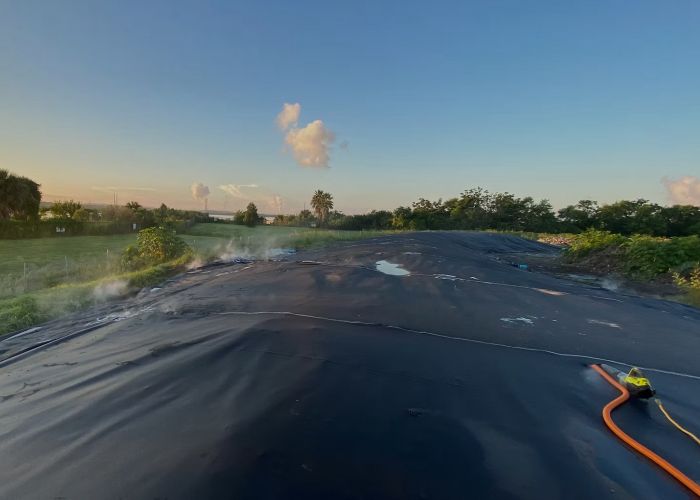
Sheet membranes. These are rolls of reinforced polyethylene or similar materials installed directly on the subgrade before pouring the concrete slab. They come in different thicknesses, typically from 6 mil to 40 mil or more. Thicker membranes offer better puncture resistance and lower permeance ratings. Brands like Stego, Insulation Solutions, and Raven Industries are common in the industry. Sheet membranes must be properly overlapped and sealed at seams to work correctly. A single gap can compromise the entire system.
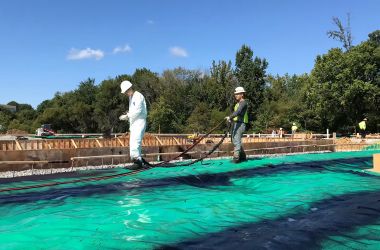
Fluid-applied membranes. These are liquid coatings like CETCO Liquid Boot that cure into a seamless, bonded barrier. They are ideal for irregular surfaces, repair work, or retrofits where sheet membranes are hard to install. Fluid-applied barriers bond directly to the concrete, creating a monolithic layer with no seams. This makes them highly effective, though they typically cost more than sheet membranes for large areas.
Composite systems. Some projects use a combination of sheet membranes and fluid-applied coatings, especially around penetrations, pipe boots, and column bases where sheet materials are difficult to seal completely.
How Vapor Barriers Are Installed
Installation follows a general sequence, though details vary by product and site:
1. Site preparation. The subgrade is graded smooth and compacted. Sharp rocks and debris are removed to prevent punctures. A layer of sand is often placed as a bedding material.
2. Membrane placement. Sheet membranes are rolled out with proper overlap, usually 6 to 12 inches at the seams. Seams are taped or heat-welded per the manufacturer instructions. For fluid-applied systems, the concrete is primed and the liquid coating is spray-applied or rolled on in one or more coats.
3. Penetration sealing. Every pipe, conduit, and column that goes through the slab needs a boot or seal. This is the most common failure point in vapor barrier systems. Taking extra time here pays off.
4. Concrete placement. The slab is poured directly over the vapor barrier. Care is taken not to damage the membrane during rebar installation and concrete placement.
5. Inspection and testing. Many projects require third-party inspection of the vapor barrier before concrete is poured. Moisture vapor emission testing (ASTM F1869 or ASTM F2170) after the slab cures verifies the system is working.
What You Can Expect to Pay
Vapor barrier costs vary widely based on material type, slab size, site conditions, and labor rates in your area. As a rough guide, sheet membrane systems typically run between /bin/bash.50 and .00 per square foot installed. Fluid-applied systems are more, often .00 to .00 per square foot. These numbers change fast with complex layouts, multiple penetrations, or difficult site access.
The key takeaway: whatever you spend on a quality vapor barrier, it is far less than dealing with a moisture or soil gas problem after the building is finished.
Do I Need an Expert?
Vapor barrier installation sounds straightforward, but the details matter. Improper seam sealing, inadequate overlap, and missed penetrations are common mistakes that can defeat the whole system. A certified installer who knows ASTM standards and local building codes will get it right the first time.
At EAI-South, we install Liquid Boot fluid-applied systems and reinforced sheet membranes across New Jersey, Florida, and the East Coast. Our crews are trained on ASTM E1745 standards and we provide full QA documentation with every job.
Ready to Talk?
Whether you are planning new construction, dealing with a moisture problem in an existing building, or just want a second opinion on your vapor barrier specs, give us a call. We have offices in Jersey City and Fernandina Beach and we cover the whole Eastern seaboard.