
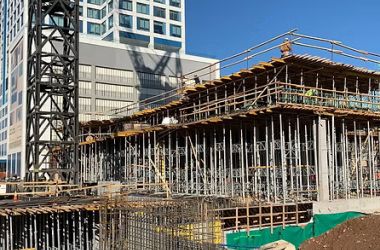
If you are developing property in New Jersey, vapor intrusion mitigation is something you are going to run into. Maybe not on every project, but on enough of them that understanding the basics will save you time and money. This guide covers the systems available, what NJDEP requires, and how to plan for vapor mitigation in your budget.
What Is Vapor Intrusion?
Vapor intrusion happens when chemicals from contaminated soil or groundwater evaporate and travel up through the soil into a building. The vapors enter through cracks in the concrete slab, around pipe penetrations, and at construction joints. Common contaminants include chlorinated solvents like PCE and TCE from dry cleaning operations, petroleum hydrocarbons from gas stations and storage tanks, and methane from landfills or natural deposits.
These vapors can create health risks for building occupants. Long term exposure to some of these chemicals has been linked to serious health problems. That is why NJDEP and the EPA take vapor intrusion seriously.
NJDEP Regulatory Requirements
New Jersey has some of the most comprehensive vapor intrusion regulations in the country. If your property has a history of industrial use or is located near a known contaminated site, NJDEP will likely require a vapor intrusion evaluation. This starts with soil vapor testing to measure contaminant levels. If levels exceed NJDEP screening criteria, a mitigation system is required before the building can be occupied.
The regulations apply to both new construction and existing buildings undergoing renovation. If you are converting an old warehouse into apartments or offices in a place like Jersey City or Newark, expect vapor intrusion to come up during the permitting process.
Types of Mitigation Systems
Sub-Slab Depressurization (SSD). This is the most common system for new construction. A network of perforated pipes is installed in the stone layer beneath the slab. The pipes connect to a fan that creates negative pressure under the slab. Soil gas is pulled through the pipes and vented above the roofline. SSD systems are effective for most VOCs and radon. They require a vapor barrier under the slab to complete the seal. Fans run continuously and need periodic maintenance, but the reliability is hard to beat.
Passive Venting. Passive systems rely on natural convection. A pipe stack runs from below the slab up through the building and out the roof. Warm air naturally rises through the stack, creating negative pressure that draws soil gas out. Passive venting costs less to install because there is no fan or electrical work. But performance depends on weather conditions. Most codes allow passive venting with a requirement to add a fan later if testing shows it is needed.
Methane Mitigation Systems. Methane requires special handling because it is explosive at certain concentrations. Methane systems typically include a gas-proof vapor barrier, a venting layer, and active extraction fans. The fans need to be explosion proof, and continuous monitoring is often required. CETCO GeoVent is a popular system for methane mitigation because it combines the barrier and venting layer in one product.
Soil Gas Monitoring. For ongoing verification, permanent soil gas monitoring points can be installed around the building. These allow periodic testing to confirm the mitigation system is working over the long term.
Planning for Vapor Mitigation in Your Budget
Vapor mitigation costs vary based on the system type, slab size, and site conditions. SSD systems for a typical commercial building can range from a few thousand dollars for a simple setup to well over fifty thousand for a complex system with multiple fans and extensive piping. Passive venting is less expensive upfront but may require fan retrofitting later. Methane systems cost more because of the specialized equipment.
The key is to budget for vapor mitigation early. Adding a system after the building is designed is more expensive than including it in the plans from the start. If your site has known contamination or is near a former industrial area, plan for vapor mitigation in your project budget.
Working With EAI-South
We design and install vapor intrusion mitigation systems across New Jersey. SSD systems, passive venting, methane mitigation, soil gas monitoring. Our team understands NJDEP requirements and designs systems that meet regulatory standards. We have offices in Jersey City and Fernandina Beach and cover the whole East Coast.